JOIN

INNOVA PHYSICS UPV · VALÈNCIA

BUILD THEBEAM

A student team at the Universitat Politècnica de València designing and building ALOHA, an open-hardware tabletop electron accelerator.

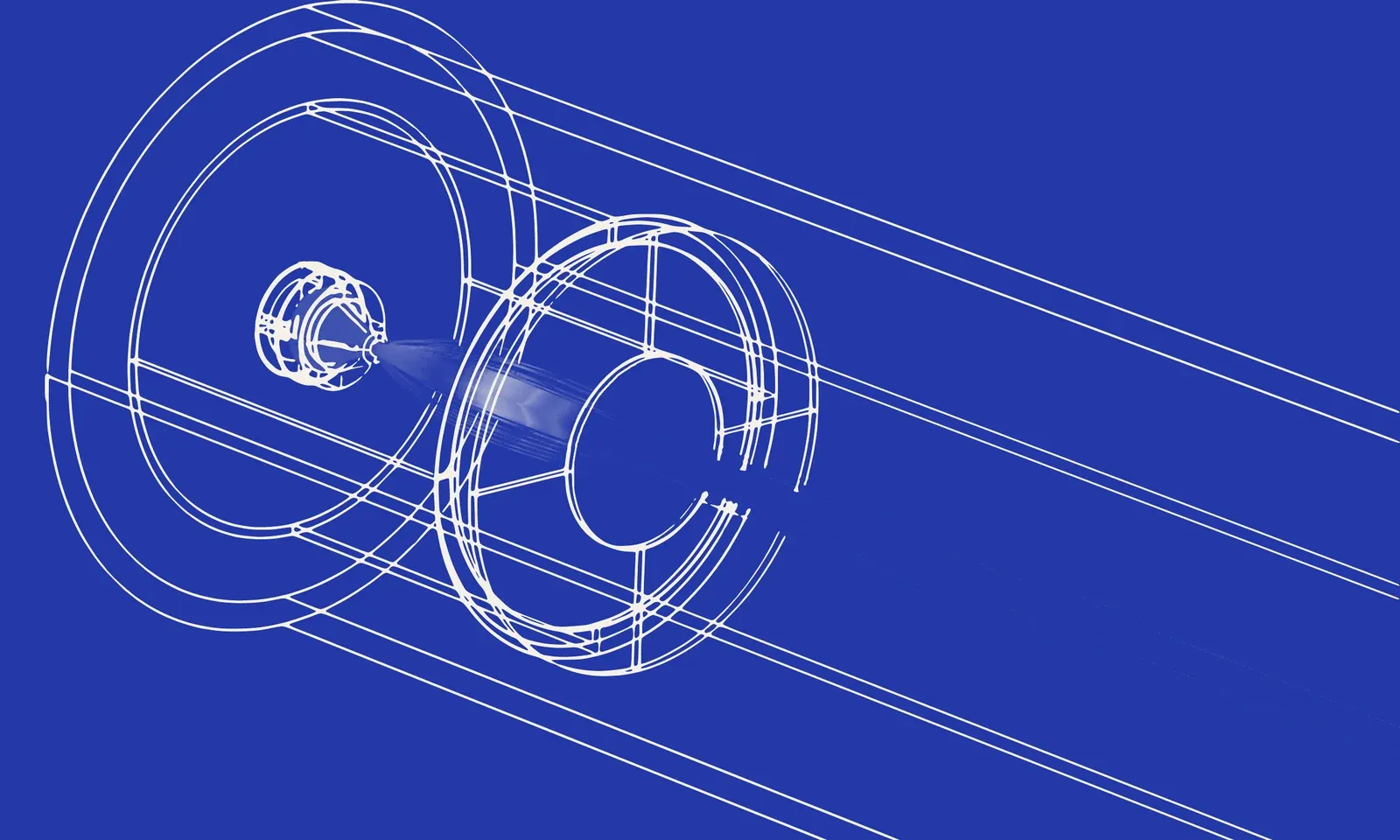
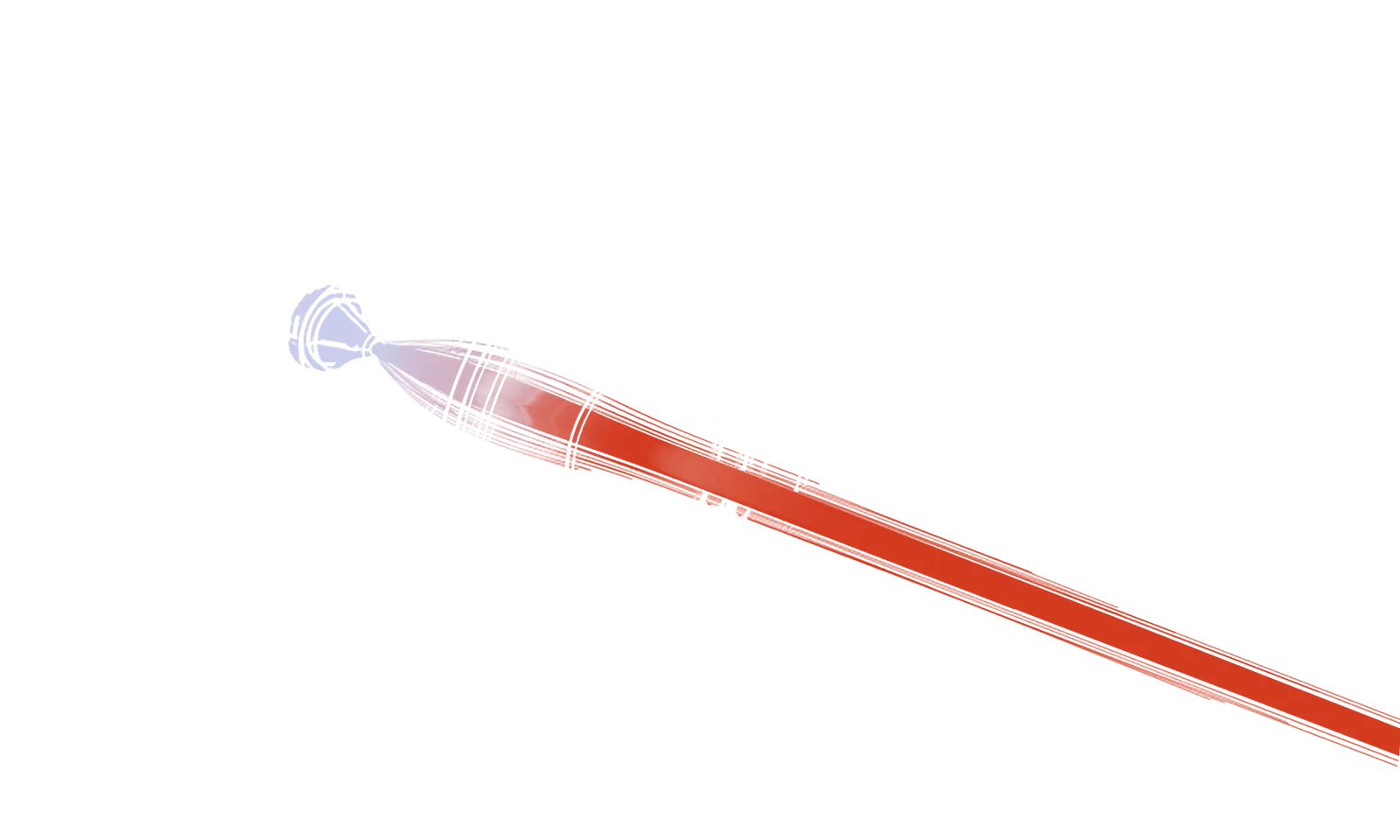
COMSOL simulation of the ALOHA-0 electron source: the electrodes as a white wireframe and the electron beam leaving the cathode, pale at low energy and vermilion once accelerated.
ALOHA-0, the electron source. Simulated in COMSOL.ELECTRON ENERGY · 0 30 keV

THE TEAM

Particle accelerators, within reach of students

Few universities let undergraduates near an accelerator. At the UPV, the accelerator elective our tutor teaches at ETSIT began as our proposal. We are students from different degrees who design, simulate and build an accelerator, and we aim to publish every step so other teams can build their own.

50 STUDENTS IN 2026-27 · 4 DEPARTMENTS

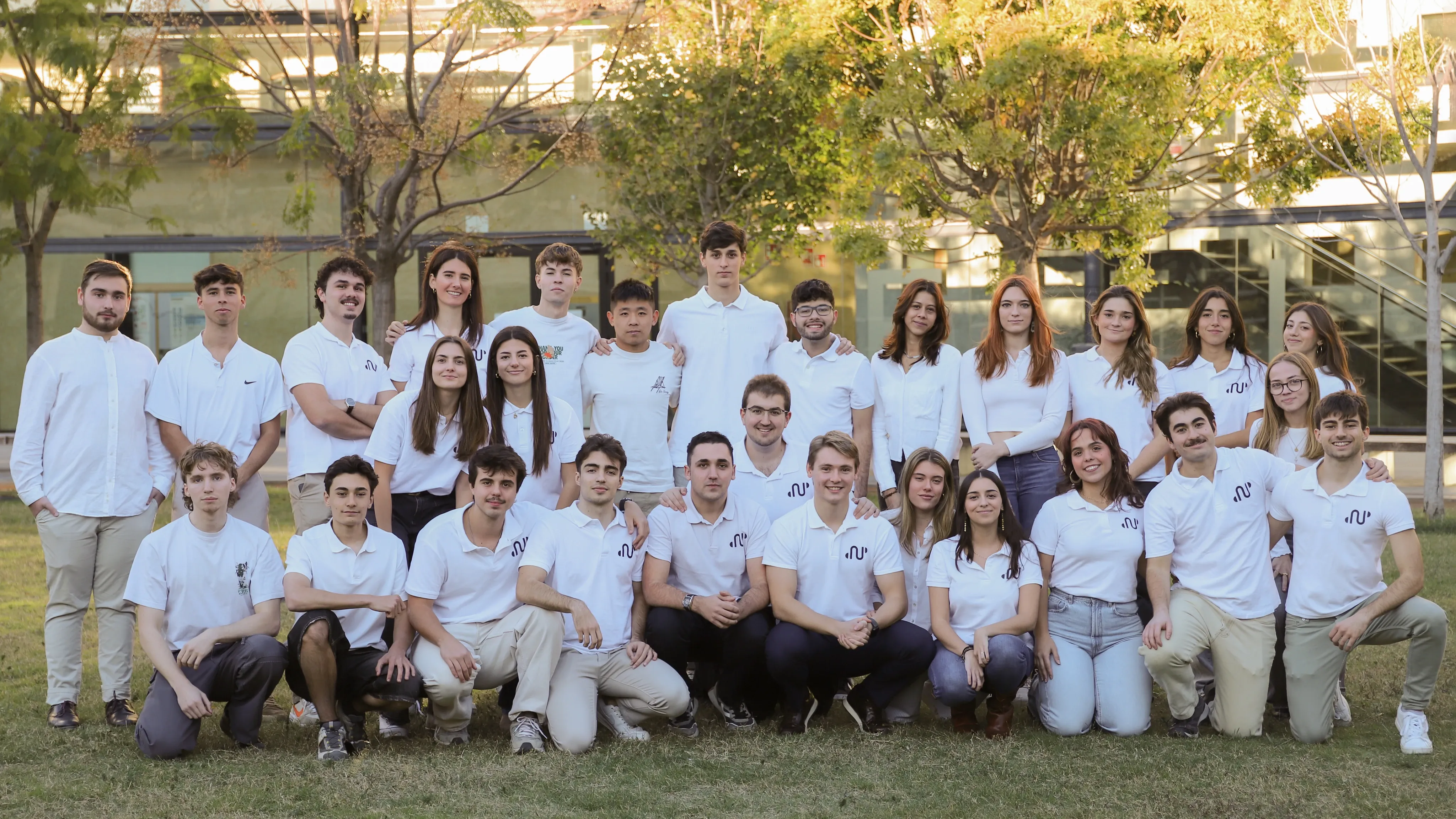
The Innova Physics UPV team, about thirty students in white team shirts, outdoors.
25/26 team photo.

OUR STORY · ALOHA · SINCE 2026

One beamline

Read it like an accelerator, from the source to the target: every step adds an element to the line.

  • BUILT
  • SIMULATED
  • NOT BUILT YET
  • THE BEAM, AS FAR AS WE HAVE COME

2026 · ALOHA

An accelerator designed by undergraduates

In 2026 the new coordination put a real proposal on the table: an accelerator designed and built by undergraduate students, to be published as open hardware so others can build it too. We called it ALOHA, A Linear Open-Hardware Accelerator.

What about undergraduates?
2026 · MODEL-0

A beam you can see

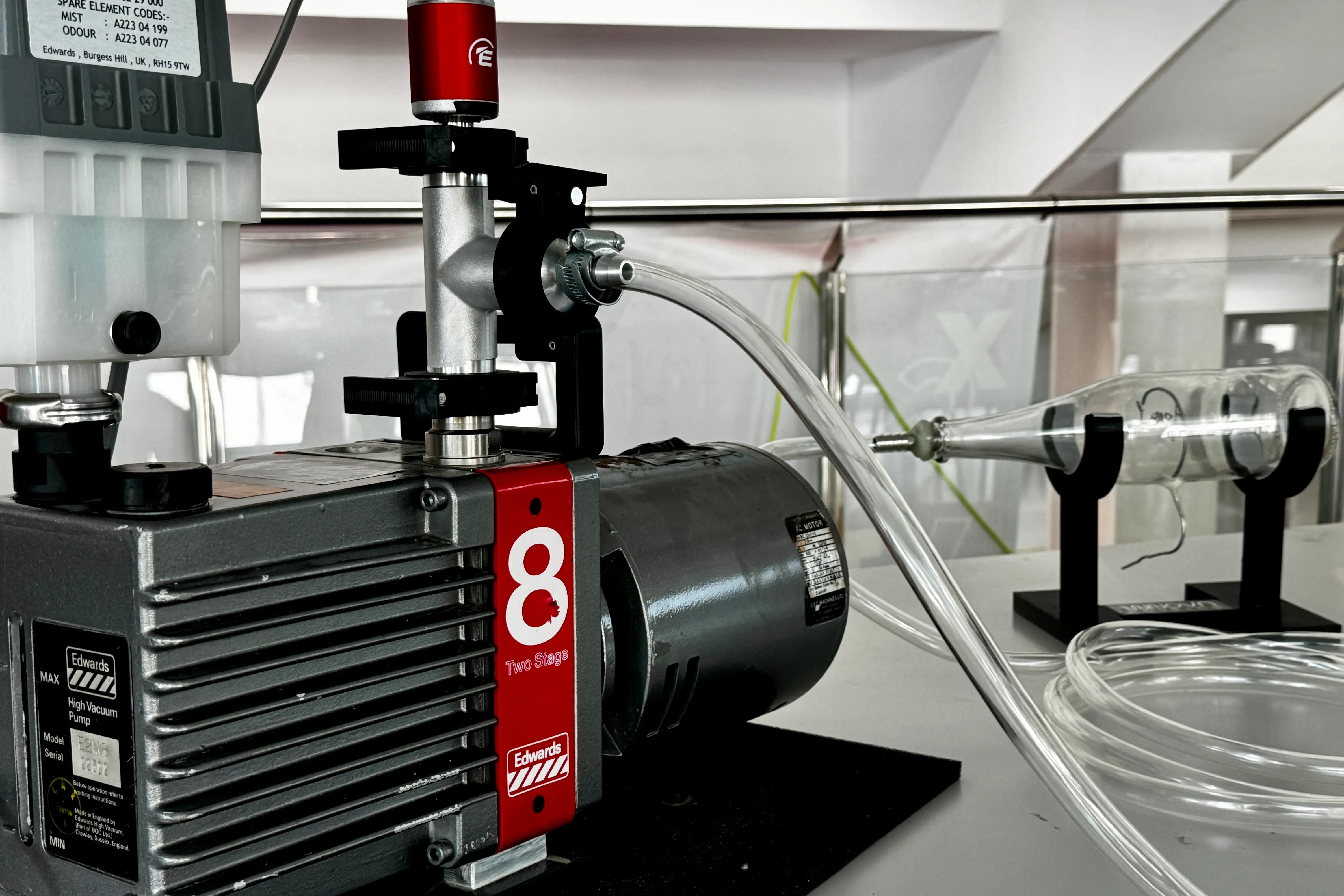
Our first device is a demonstrator for science communication: a glass bottle, a vacuum pump and a high-voltage supply. Pump most of the air out, switch on the voltage, and the thin gas glows where the electrons pass. Proposed the season before and finished as the coordination changed hands, it brought Edwards Vacuum on board as our first sponsor.

Model-0 on the bench: an Edwards vacuum pump connected to the glass tube where the discharge glows.Model-0 on the bench: an Edwards vacuum pump connected to the glass tube where the discharge glows.
Model-0 on the bench. The vacuum pump and the glass tube where the discharge glows.

JULY 2026 · CERN

Our posters at CERN

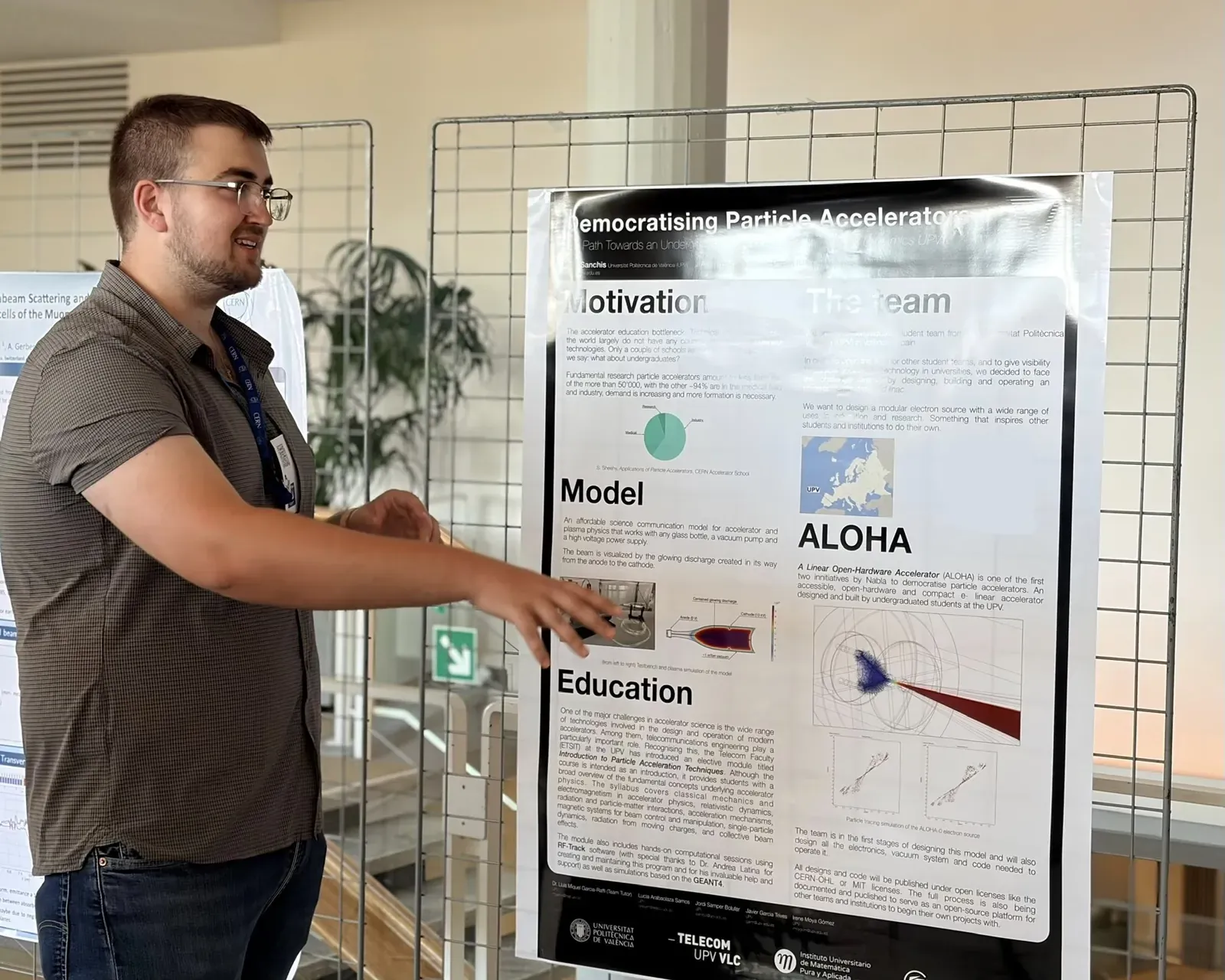
We took ALOHA to CERN, with Model-0 and the first design of our electron source, on two posters: one on our case for teaching accelerators by building them, one on the source. We presented them at the accelECR poster session for early-career researchers, and visited IdeaSquare.

A team member presents the poster Democratising Particle Accelerators at the poster session at CERN.A team member presents the poster Democratising Particle Accelerators at the poster session at CERN.
The accelECR poster session. CERN, 3 July 2026.

2026 · ALOHA-0

The electron source, simulated

Our first accelerator starts where every accelerator does, with a source. ALOHA-0 is a thermionic triode in telefocus configuration: a hot tungsten cathode emits, a Wehnelt cylinder shapes the emission, and the anode pulls the beam out. Simulated in COMSOL at 30 kV, it gave 1.5 mA in a spot under a millimetre; the build aims at 20 kV and under 1 mA.

SEE THE MACHINE

The ALOHA-0 electron source on its axis. Cathode, Wehnelt and anode are hatched because they are simulated.
The source, in section. Cathode, Wehnelt and anode hatched: simulated.

IP3 · 2026-27 · NOW

From simulation to the bench

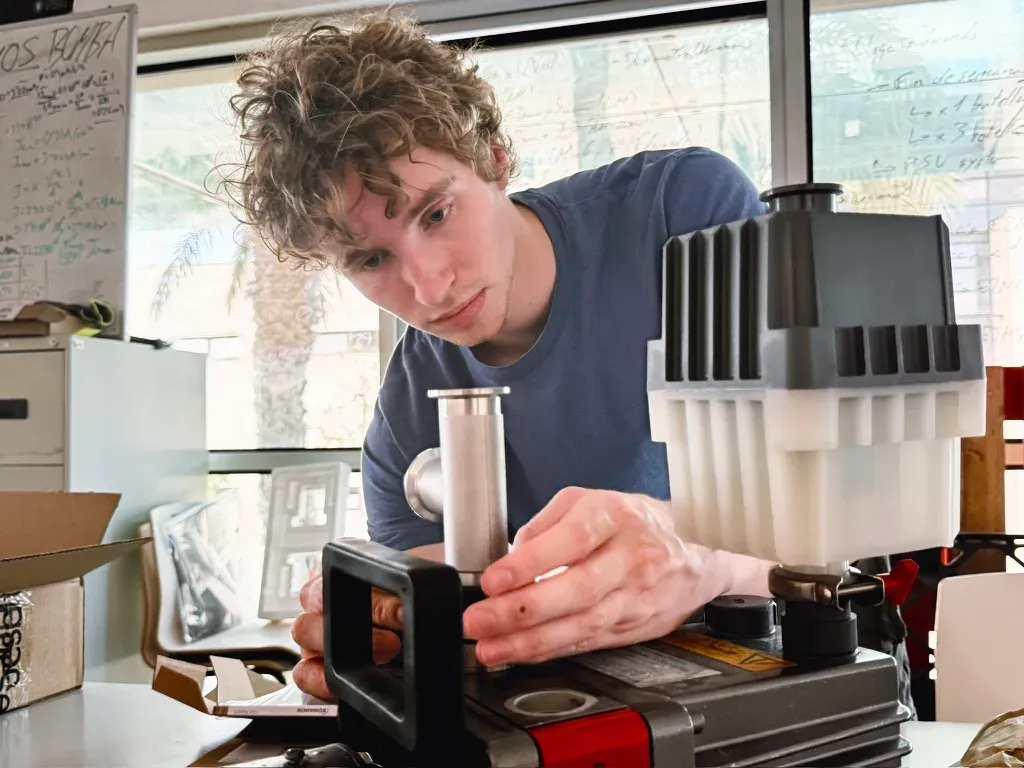
This semester we build the vacuum system and its control, the bench ALOHA-0 will be tested on, and then, if time and funding allow, the cathode supply. We aim to end the season with the vacuum system pumped down and measured, and its electronics tested.

A team member at work on the vacuum pump of the bench.A team member at work on the vacuum pump of the bench.
At the vacuum bench. 2026.

NEXT · ALOHA-2

A beam that reads paintings

Next, ALOHA-0 becomes the source of an X-ray instrument for conservation: its beam makes X-rays, and each pigment in a painting answers with its own lines, read without taking a sample. The 20 keV ceiling protects the paintings.

SEE THE MACHINE

Every pigment has its own lines.

THE TARGET · AN AIM

A beam reads a painting twice.

Above the line, energy: every pigment answers the beam with its own X-ray lines. Below it, depth: the layers a painter laid, and the ones they covered. We aim to make ALOHA a tool for conservation, one that reads pigments without taking a sample.

PROBE ON · VERMILION

Cinnabar, mercury sulfide. Under the ultramarine, it says the robe was red first.

LINE · Hg Lα · 9.99 keV · mercury, in vermilion

A panel painting in section. Schematic, layers not to scale; energy from 1 to 15 keV, lines tabulated.Select a layer to read it, or point at a line to name it.

JOIN · 2026-27

Build it with us

Students from different degrees design, simulate and build ALOHA together: you learn by building, in one of four departments. Applications closed on 16 October. Write to us to apply late, as an exception, or to hear when the next round opens. We aim to open it in February.

We handle your application as our privacy notice explains.

WITH THE SUPPORT OF

BECOME A PARTNER